What decides your hero pick in Marvel Rivals when the map does the drafting?
You can order the same kind of articles for your own video to boost it on YouTube and Google. Just message the Telegram bot @sat_sit_bot. Articles with your video embedded are written and posted by the bot itself — on popular topical sites (no ads). Try it free: 50 articles on us.
· based on the channel Salty Phish
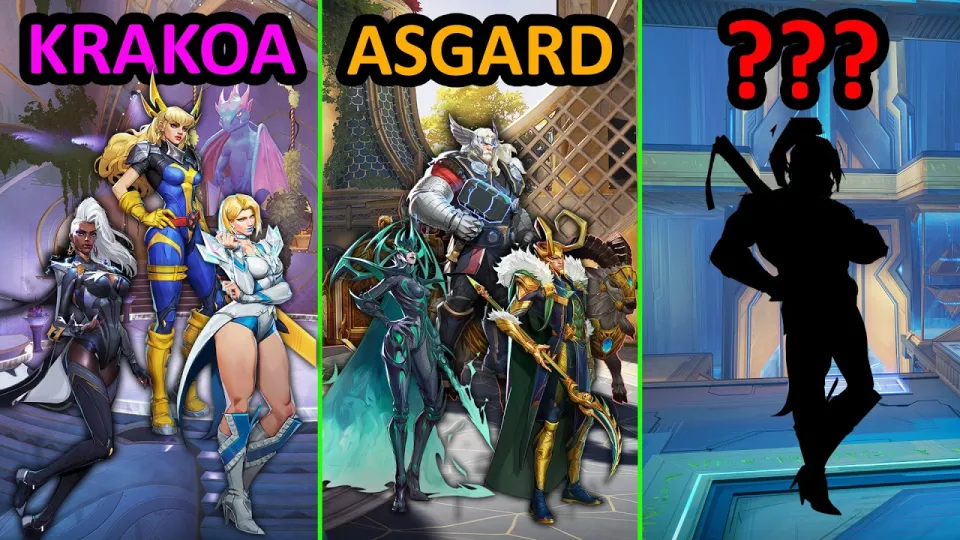
The map decides the hero pool in Marvel Rivals because the game's locations are tied to specific corners of Marvel lore, so a Klyntar match points to symbiotes, an Asgard match to Norse gods and a Wakanda match to Black Panther's circle. The rule Salty Phish plays by is simple: queue into a map, then build the comp only from heroes who canonically belong there. You can watch the full run live at Salty Phish's Twitch channel, where the same map-first logic drives the picks.
How the map-based hero draft works in Marvel Rivals
A map-based draft replaces the usual counter-picking with a lore filter, and the filter is applied before the first fight starts. You queue for quickplay, see the location, and only then decide who is legal. That means no swapping to a comfort pick because the enemy team has two tanks, and no defaulting to the same main every game.
The practical loop looks like this:
- Load into a match and identify the map, not the mode.
- Name the Marvel faction, city or era the map belongs to.
- List every hero with a canonical connection to that faction, city or era.
- Lock a comp from that list, even if it is unbalanced.
- Keep the pick for the whole match and accept the result.
The challenge works best in quickplay, where a strange comp costs nothing but a few minutes. In ranked, a symbiote-only or Asgard-only roster can fall apart against a team picking freely, which is exactly why the format is a casual experiment rather than a climbing strategy.
Marvel Rivals map rules, location by location
The Klyntar rule is the tightest one, because the map is a symbiote homeworld and the roster that fits is tiny. Venom is the obvious lock, and any hero whose story involves the symbiotes or Knull can be argued in. The upside is theme; the downside is that a one-hero pool forces everyone else onto flex picks that barely qualify.
The Asgard rule is the most generous of the godly maps. Thor, Loki and Hela are the core, and the wider Norse corner of Marvel gives you room to justify a few more. This is the map where the challenge looks most like a real team, because Asgard-linked heroes cover more than one role.
Wakanda is where the lore gets interesting. In Rivals continuity the location is tied to the Intergalactic Empire of Wakanda, and the Guardians of the Galaxy are canonically sent from Wakanda toward Klyntar on a mission connected to Knull and Bast. That means Star-Lord, Rocket, Groot and the rest of the Guardians can be defended on Wakanda maps, and Venom can be stretched in too. The Winter Soldier belongs here as well: in Rivals lore the Wakandans built his arm, and he says as much when Tony Stark offers an upgrade.
Why Shin-Shibuya and the 2099 maps break the simple rule
Shin-Shibuya punishes a lazy "Tokyo map equals Japanese heroes" reading, because the location is a future version of the city rather than a present-day one. The Stark-Fujikawa building sits on that map, a future descendant of Stark technology, which pulls Iron Man into the legal pool and gives him dialogue that nods to the connection.
Spider-Island runs on the same logic. It is a 2099 setting, so heroes who exist or operate in that future timeline fit better than a hero who simply shares a city with Spider-Man. Punisher and Captain America have future-2099 ties that make them arguable picks there, while Psylocke is a weaker fit for a timeline rule even if she is a strong hero on the map.
The Collector's museum maps add a third kind of exception. Jeff, Psylocke and Mantis were imprisoned in the Collector's collection in the game's backstory, so a Knowhere-style or museum-style location can justify them on narrative grounds rather than geography.
New York maps and the Devil Dinosaur problem
Lower Manhattan and Midtown invite the widest arguments because New York is the busiest address in Marvel, and the roster that can claim it is enormous. Spider-Man, Moon Knight, Punisher, Daredevil-adjacent street-level heroes and most of the Avengers can all be defended, which turns the draft into a negotiation instead of a restriction.
Devil Dinosaur is the test case. He lives in New York with Moon Girl, and in Marvel continuity a giant red dinosaur is simply part of the city's daily chaos, so he counts for a New York map even though he feels like a jungle pick. The same generous reading lets in heroes who only visited New York in a single arc, which is why New York maps produce the loosest comps in the challenge.
Common disputes in map-locked Marvel Rivals comps
The disputes are the point of the format, and most of them come down to which kind of connection counts. A hero who was born on a map's planet, a hero who was imprisoned there and a hero who once visited all produce different answers, and the challenge only stays fun if the group agrees on a standard before the match.
Three standards cover almost every argument:
- Origin: the hero was created, born or based on that location.
- Story: the hero appears there in Rivals lore, dialogue or map props.
- Era: the map is set in a timeline the hero belongs to, such as 2099.
Pick one standard, apply it to the whole roster and the draft stays consistent. Mix standards mid-match and every pick becomes debatable, which is how a two-minute queue turns into a ten-minute lore debate.
Useful links
- Salty Phish on Twitch for live Marvel Rivals matches
- Salty Phish on Twitter for schedule and clip posts
- Salty Phish on TikTok for short highlights
- Salty Phish on Reddit for community threads
- Salty Phish on Instagram for behind-the-scenes posts
The takeaway for your own map-locked runs
A map-based hero draft is the cheapest way to relearn Marvel Rivals, because it forces you off your main and onto heroes you would never queue. It also teaches map identity faster than any guide, since you start noticing which props, billboards and background details belong to which faction. Start with the strict maps like Klyntar, loosen up on Asgard and New York, and agree on a single lore standard before the first fight. Salty Phish built the format as casual content, and that is the right way to play it. If you want to see the next map roulette live, head to Salty Phish on Twitch and watch the picks happen in real time.
Key takeaways
- In the Salty Phish challenge every quickplay match is a new hero comp, and the queued map decides which heroes are legal.
- Klyntar maps restrict picks to symbiote and Knull-linked characters such as Venom.
- Asgard maps open up Thor, Loki, Hela and other Norse-linked heroes.
- Shin-Shibuya is a 2099 map, so time-displaced and future-linked heroes fit it better than a pure Tokyo rule.
- Wakanda maps in Rivals lore are tied to the Intergalactic Empire of Wakanda, which widens the roster to space-faring heroes.
Questions & answers
Which heroes are allowed on Klyntar in Marvel Rivals?
Klyntar is a symbiote world, so Venom is the anchor pick and any hero tied to the symbiotes or Knull can be argued in. The pool is the smallest of any map, which makes the comp lopsided but thematically clean.
Why does Iron Man count for Shin-Shibuya?
Shin-Shibuya is a 2099 map, and the Stark-Fujikawa building on it is a future descendant of Stark industry. Iron Man even has dialogue referencing the connection, so he fits an era-and-corporation rule rather than a purely Japanese-hero rule.
Do the Guardians of the Galaxy belong on Wakanda maps?
In Rivals lore the Guardians are sent from Wakanda toward Klyntar on a mission involving Knull and Bast, and the Milano appears in map animations leaving the Wakandan spaceport. That makes Star-Lord, Rocket, Groot and the rest defensible picks on Wakanda.
Should the Winter Soldier be legal on Wakanda maps?
Yes, if you use Rivals continuity rather than the films alone. The Wakandans built Bucky's arm in the game's lore, and he tells Tony Stark that the Wakandan work beats any Stark upgrade, so he has a direct canonical tie to the location.
Source: The MAP Decides Our Heroes in Marvel Rivals · Markdown version